Emerging Technologies Essay: VR
Over the years, Virtual Reality (VR) has significantly impacted the Games industry, with an expectation of growing from £8.33 billion in 2021 to £10.91 billion in 2022 (The Business Research Company, 2022). This can be evidenced through the advancements in the tech, particularly the way VR has become wireless and affordable, makes VR primed and ready for exponential growth, an article by Wire Shopper talks about the new advancements in greater detail, more importantly is the idea of cheap accessible virtual reality is here and here to stay (Hayden, L. 2019). The idea that an entire world can be experienced in a way so close to our existence is something only the median of games could portray effectively. With VR, players can be fully immersed in a universe of their own, and the line between reality and virtual becomes blurred.
Virtual reality (VR) is the ability to create images through the use of a computer, that fully immerses the player into an almost real environment (Oxford Advanced American Dictionary, accessed 18th November 2022). VR, as we know it today, is all about enhancing the experience of entertainment; these enhancements create the general appeal of VR to creative industries. Importantly, this has impacted the games industry: past, present, and future, through the years, VR hasn't always been at the forefront of the industry. Only changing the landscape of it through 3 eras: The past, with the hasty ideas of the Virtual Boy and Sega VR, would affect the industry by having investors turn a blind eye to VR in the early days. The early days, with the groundbreaking ideas from Palmer Luckey and Steam being the new cutting-edge developers and early adopters of VR, this would be an irreversible change as the collaboration is the catalyst for the future of VR. The future entails a wireless more accessible idea for VR, being not just used for games; but for education and military purposes, this isn't a direct benefit for the games industry, it just shows how far the idea has gone. Endeavours in VR have changed the industry's landscape, as mentioned previously, Palmer Luckey and the Oculus really changed the way developers, investors, and players witnessed the games. The entire landscape was changed as people began to witness that VR inherently changed the way games interacted with the player, allowing them to become fully immersed in the video game through the use of VR headsets This essay will explore the history of VR, focusing on the technical advancements over the years. As well as critically evaluating both the positive and negative impacts this technology has had on the Games, Animation and VFX industries.
The idea of a simulated reality was first used in Pygmalion's Spectacles, a book made by Stanley G. Weinbaum and published in June 1935 (Weinbaum, 1949). The book notes the blur between reality and simulation. Stating that “he had forgotten the paradoxes of illusion; this was no longer an illusion to him, but reality itself.” (Weinbaum, 1949). These futuristic ideals allowed the reader at the time to begin to see the possibilities of virtual reality in terms of entertainment, allowing the reader to recognize an illusion portrayed to them through the Pygmalions Spectacles. This, in turn, paved the way for the future of virtual reality and inspired advancements to be made such as the stereoscope, a device that could display 360 degree images to a person, this also affected early military capabilities of flight, battlefield and vehicle simulators. This is because the ideas planted in this book directly impact services such as the military where you want your soldiers to be as prepared as possible, leading for stereoscopic images and virtual worlds to forefront this amazing advancement.
The futuristic tone was very emphatic, and as much as we haven't seen a simulation of all senses, the progress made since would've made Weinbaum's story seem like non-fiction, as for the readers of the time, this was nothing more than a story, something made up. But now, through all the advancements we have made with virtual reality and haptic feedback, which is the stimulation of senses, this story really does seem like a piece of non-fiction as the days go by.Weinbaum’s inspirations are unknown, but undoubtedly the existence of the stereoscope helped. The stereoscope, a huge part of VR history, was created in 1838 by Charles Wheatstone (Wheatstone, Accessed: 03 June 2023).
The idea of transporting someone into a different environment was created here. Stereoscopic images were used as an alternative to postcards, even being sold at the same places showing the same scenic places. (Early photography, accessed ). As much as we now call this technology old, Stereoscopes are still used today to give VR goggles perceived depth! At this time, the United States military had heard of VR: things such as flight, battlefield, and vehicle simulators, medic training, and even virtual boot camps were used to train their militia. This started in the 1970s and has evolved ever since, even until today (Liszewski, 2022).
VR is also used to treat soldiers suffering from PTSD (Matthew Tull, 2020). Certain military simulators were used in the cold war but it wasn't until the 1980s that computers were introduced. The games industry only caught up to the idea of VR post-first generation. With Sega's boost in funding after the genesis, Sega tried their hands in low-cost virtual reality and, led by Stewart Kosoy, made a headset with reliable head tracking sensors. However, more complications arose with the high costs of hardware required to render, the challenges with creating controllers and interfaces, and the unfeasible nature of the technology, these are all challenges that future VR designers need to overcome. Sega VR was removed from its release schedule in late 1994 (Sega Retro, 2022).
Similarly, the Virtual Boy set out to initially compete with the Sega VR, both of which are low-cost VR machines capable of running games in a 3d environment. Whereas Sega wanted to create an interactive VR experience, Nintendo wanted to put out something on a smaller scale. This, in turn, Would be the downfall of the system as a high price, monochrome display, health concerns, and unimpressive stereoscopic and VR effects turned consumers away. (Virtual Boy Nintendo, accessed 14th November 2022). After the console markets failed to make VR work in the late 80s, The early 90s developments were claimed by arcades and in 1992. A company named Virtuality created a line of VR gaming machines with real-time 3d graphics and joysticks as controllers. All of these address the problems encountered in both home console versions of VR and, because arcade machines are more powerful, they could be very expensive and still cost the consumer less money as they were manufactured for video arcades to purchase (Vradmin, 2018).
The 2000s is a time often called the hibernation of VR. Early in the 2000s, the world was more focused on the crisis more important than VR development. However, this didn't mean technology wasn't advancing, it was just a dormant period for VR. The 2010s rolled around with the introduction of Google's street view, a piece of immersive media that was a huge undertaking project of 360 images of all earth's roads using street view. This had a great impact on the Games, Animation and VFX industries specifically for the consumer. VR, which was once hailed as an old expensive medium, was now available and it wasnt on a console of a high end PC, this virtual reality could be accessed on your phone. A direct cause of this is the amazing developments of Augmented Reality and, more importantly, showing what VR can do for a wider crowd. We know this is the case when we look at the millions of users who used Google Street View in 2010 (Anguelov, D., Dulong, C., Filip, D., Frueh, C., Lafon, S., Lyon, R., Ogale, A., Vincent, L. and Weaver, J. 2010) . All of this talk of VR was bound to spark something amazing and that came within a person named Palmer Luckey. (Barnard, 2022).
Palmer Luckey worked on reviving VR and making it more accessible to the consumer. With his history of tinkering, he started prototyping Oculus, through the spread of Luckey’s prototyping, the creator of Doom 3 reached out to port Doom to the Oculus. This made the public look towards VR again similar to how they looked at the virtual boy years prior. The technological developments that occurred in the 2000s made the public more excited about VR as modern-day graphics would have made VR incredible. Oculus created two developer kits after their Kickstarter made £1.9 million of their £200,000 goal, and two years later in 2014, Facebook saw the potential of VR and bought out Oculus for £1.83 billion
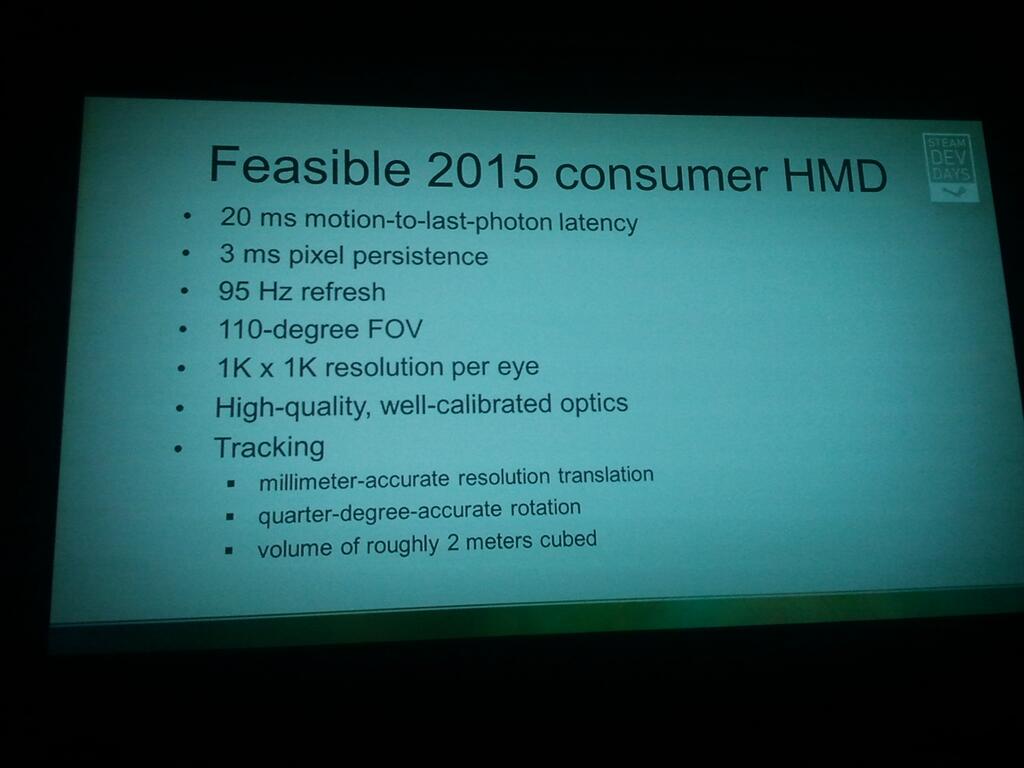
Before the creation of the Oculus, Palmer’s Kickstarter idea reached the eyes of Gabe Newell, President of Valve. Valve rushed to hire hardware engineers, and this action caused speculation as to if Valve was planning to create its own headset to rival the Oculus Kickstarter project. However, as stated in an article by Eurogamer “Valve has no VR headset, it’s backing Oculus Rift”. Luckey’s design was far-fetched, and Newell’s concern was in the parameters of the head-mounted display (HMD). Valve’s feasible 2015 consumer HMD list is set to give a roadmap for what was to come up until 2015. This may be confusing, as Valve's endeavours in things such as the Vive and Valve index do directly counteract the work done between the two companies. Whether or not it was out of courtesy to Luckey’s design, to avoid a Mark Zuckerberg-esque lawsuit, or out of a genuine passion for developing the industry is unknown. However, the deliberate wait in creating competition in the market had a serious impact on the gaming industry as a whole, as if Valve chose to not help and/or make their own HMD, we would have been set back many years of crucial development which in turn would have lasting effects on the industry and games made. Who knows what other consequences the choice would have had, some speculate that VR would have been buried as it did the Virtual Boy without Valve stepping in to help.
After all was said and done VR had started to make a name for itself however, the one thing it didn't have was a large player base like pre-existing consoles had, the technology was niche and still quite expensive in comparison to more accessible games consoles at the time. I conducted primary research through a survey done on a small sample size of around 20 avid users of games consoles and enthusiastic gamers. In this survey, many questions were asked and one of them was where you have heard about VR first, the overall consensus was through Youtube, starting at around 2016 and the answers went as far as 2019. This weird outlier makes sense as the sample size’s age was around 17-18 and they would have been around 11-15 when viewing the content. Most notably, YouTuber “Jacksepticeye” released a video on the fifth of April 2016 garnering almost 17 Million views on one of his debut VR videos, Since then he has well over 65 million views just on this series. Youtube, and other similar content streams, have affected all markets of media consumption. Especially in the games industry, with an attributed 100 billion watch hours crossed in 2020 (Park, G. 2020). , it's hard to ignore the lasting impact content creators have in swaying public opinion. A quote from Forbes’ article on content creators states “Creators know how to reach the audience that many large businesses are struggling to reach.” (Bogliari, A. n.d.) (McLachlan, S. 2022).
In the present day, VR technology has advanced rapidly, we are in the late stages of exponential growth and it’s impossible to tell where we are going next, however right now, major leaps are happening and have been happening. The Quest 2 was released in October of 2020, amid the Covid-19 pandemic, flocks of new people found VR as an escape and with the Quest 2s low price point of £400 and the accessible nature of being an all-in-one system, meaning it did not need a connected PC, made the VR industry explode once again, this made so many jobs in the industry as VR specialists would be hired in most big name companies, with an expected rise to 23 million in 2030 (Statista. (n.d.).

The applications did not stop at just these companies, VR Indie games like Superhot, Among Us and Beat Saber were all able to be made by smaller groups. This is because of the accessibility made apparent by Unity and Unreal with the creation of VR-specific applications. The advancements in VR don't stop at just gaming and military capabilities are expanding to include modern flight simulators which make use of the latest technology, in particular, the ability to train more than one person at a time through high-speed distributed networks. (docs.unrealengine.com. n.d.). (Technologies, U. n.d.).
The future of VR in the gaming industry is unknown as we a still on the exponential curve of this technology but an interesting thing to note is Unreal 4’s mod that allows for 90% of the games to be adapted for VR. A more interesting VR technology that is currently being developed is haptic feedback and higher resolution HMDs, this technology is interesting to talk about because it is being actively developed for the future right now. Full haptic suits (Bhaptics.com. 2023) are currently compatible with 222 games, with some reviewers noting that the feeling can be accurate to around the size of your pinky finger and the immersion can be felt through vibrations. This level of immersion is so accurate that it makes the “Pygmalion's Spectacles” story of the senses feel like it is just around the corner. Developers and gamers can enjoy these future developments in VR as the market continues to expand with the announcement of new HMDs, new sensory experiences, and more. Palmer Luckey announced that he is developing a VR HMD capable of killing the user, which is the most immersive it can get in my opinion. VR will continue to expand as it does to all places, including the workplace and education, I’m just excited to see where it all leads. (Gault, M. 2022). (Financesonline.com. 2019).
List of References
Barnard, D. (2022, October 6). History of VR - timeline of events and Tech Development. VirtualSpeech. https://virtualspeech.com/blog/history-of-vr
Hayden, L. (2019). Virtual Reality – Top Five Breakthroughs of 2019-20. [online] The WiredShopper. Available at: https://thewiredshopper.com/virtual-reality-top-five-breakthroughs/
The Business Research Company. (2022, February 24). Virtual reality in gaming market research shows high growth rate of 29% - TBRC. PR Newswire: press release distribution, targeting, monitoring and marketing. https://www.prnewswire.com/news-releases/virtual-reality-in-gaming-market-research-shows-high-growth-rate-of-29---tbrc-301489805.html
Early photography. Stereo Cards and Diapositives - Antique and Vintage Cameras. (n.d.). http://www.earlyphotography.co.uk/site/entry_I29-A.html
Encyclopædia Britannica, inc. (n.d.). Sir Charles Wheatstone. Encyclopædia Britannica. https://www.britannica.com/biography/Charles-Wheatstone
Liszewski, A. (2022, October 19). I’m in awe of this ’70s-era tank simulator that uses a tiny camera roaming a miniature model. Gizmodo. https://gizmodo.com/1970s-swiss-tank-simulator-miniature-model-tom-scott-1849676632
Matthew Tull, P. (2020, June 29). How virtual reality exposure therapy (VRET) treats PTSD. Verywell Mind. https://www.verywellmind.com/virtual-reality-exposure-therapy-vret-2797340
Oxford Dictionary. (n.d.). Virtual-reality noun - definition, pictures, pronunciation and usage notes: Oxford Advanced American Dictionary at Oxfordlearnersdictionaries.com. virtual-reality noun - Definition, pictures, pronunciation and usage notes | Oxford Advanced American Dictionary at OxfordLearnersDictionaries.com. https://www.oxfordlearnersdictionaries.com/definition/american_english/virtual-reality#:~:text=virtual%20reality-,noun,them%20and%20seem%20almost%20real
Sega Retro. (2022, June 4). Sega VR. Sega Retro. https://segaretro.org/Sega_VR#Beginnings
Virtual boy. Nintendo. (n.d.). https://nintendo.fandom.com/wiki/Virtual_Boy
Vradmin. (2018, April 17). Virtuality – a new reality of promise, two decades too soon. Virtual Reality Society. https://www.vrs.org.uk/dr-jonathan-walden-virtuality-new-reality-promise-two-decades-soon/
Weinbaum, S. G. (1949). A martian odyssey: And others. Fantasy Press.
Park, G. (2020) With 100 billion hours watched on YouTube for gaming, the site prepares for global growth, The Washington Post. Available at: https://www.washingtonpost.com/video-games/2020/12/08/youtube-gaming-2020/
Bogliari, A. (n.d.). Council Post: Four Reasons Why The Creator Economy Is Booming. [online] Forbes. Available at: https://www.forbes.com/sites/forbesagencycouncil/2021/11/18/four-reasons-why-the-creator-economy-is-booming/?sh=27ebd31753de
McLachlan, S. (2022). 22 YouTube Stats That Matter to Marketers in 2019. [online] Hootsuite Social Media Management. Available at: https://blog.hootsuite.com/youtube-stats-marketers/.
(Statista. (n.d.). Number of jobs enhanced globally by VR and AR 2019-2030. [online] Available at: https://www.statista.com/statistics/1121601/number-of-jobs-enhanced-globally-by-vr-and-ar/.)
docs.unrealengine.com. (n.d.). Virtual Reality Development. [online] Available at: https://docs.unrealengine.com/4.26/en-US/SharingAndReleasing/XRDevelopment/VR/.
Technologies, U. (n.d.). Build VR experiences with Unity. [online] unity.com. Available at: https://unity.com/solutions/vr.
Gault, M. (2022). Palmer Luckey Made a VR Headset That Kills the User If They Die in the Game. [online] Vice. Available at: https://www.vice.com/en/article/dy7kbq/palmer-luckey-made-a-vr-headset-that-kills-the-user-if-they-die-in-the-game [Accessed 3 Jun. 2023].
Financesonline.com. (2019). 7 Top Virtual Reality Trends & Predictions for 2020/2021 According to Experts. [online] Available at: https://financesonline.com/virtual-reality-trends/
(Bhaptics.com. (2023). Available at: https://www.bhaptics.com [Accessed 3 Jun. 2023].)
Anguelov, D., Dulong, C., Filip, D., Frueh, C., Lafon, S., Lyon, R., Ogale, A., Vincent, L. and Weaver, J. (2010). Google Street View: Capturing the World at Street Level. Computer, 43(6), pp.32–38. doi:https://doi.org/10.1109/mc.2010.170.
Bibliography
https://www.vrs.org.uk/virtual-reality-military/
https://en.wikipedia.org/wiki/View-Master#New_business_venture
https://gizmodo.com/1970s-swiss-tank-simulator-miniature-model-tom-scott-1849676632
https://www.army-technology.com/comment/virtual-reality-aerospace-defence-5/
https://www.theverge.com/2012/4/13/2947088/valve-reveals-secret-hardware-project-wearable-computing
https://steamdb.info/static/img/blog/43/vr6.jpg
https://www.eurogamer.net/valve-has-no-vr-headset-its-backing-oculus-rift